RNG Certification Frameworks Influence Assurance Levels in Transnational Mobile Slot Environments
Gisela Peters · Sep 28, 2026
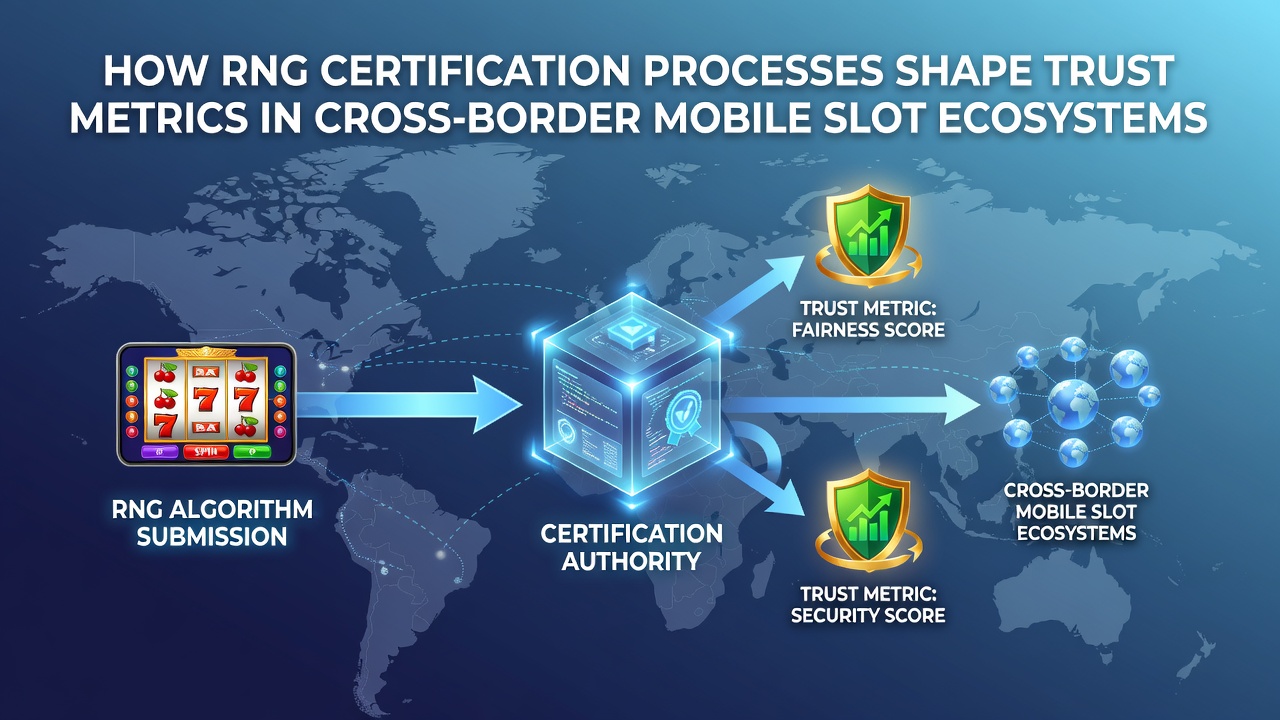
RNG Certification Frameworks Influence Assurance Levels in Transnational Mobile Slot Environments
Random number generator certification stands as a foundational element in mobile slot operations that span multiple jurisdictions, and observers note how these protocols directly feed into measurable trust indicators that operators and regulators track closely. Testing laboratories examine algorithms for statistical randomness through standardized batteries such as Diehard and NIST suites, while they also conduct live environment simulations that replicate real player sessions across different network conditions.
Core Components of Certification Procedures
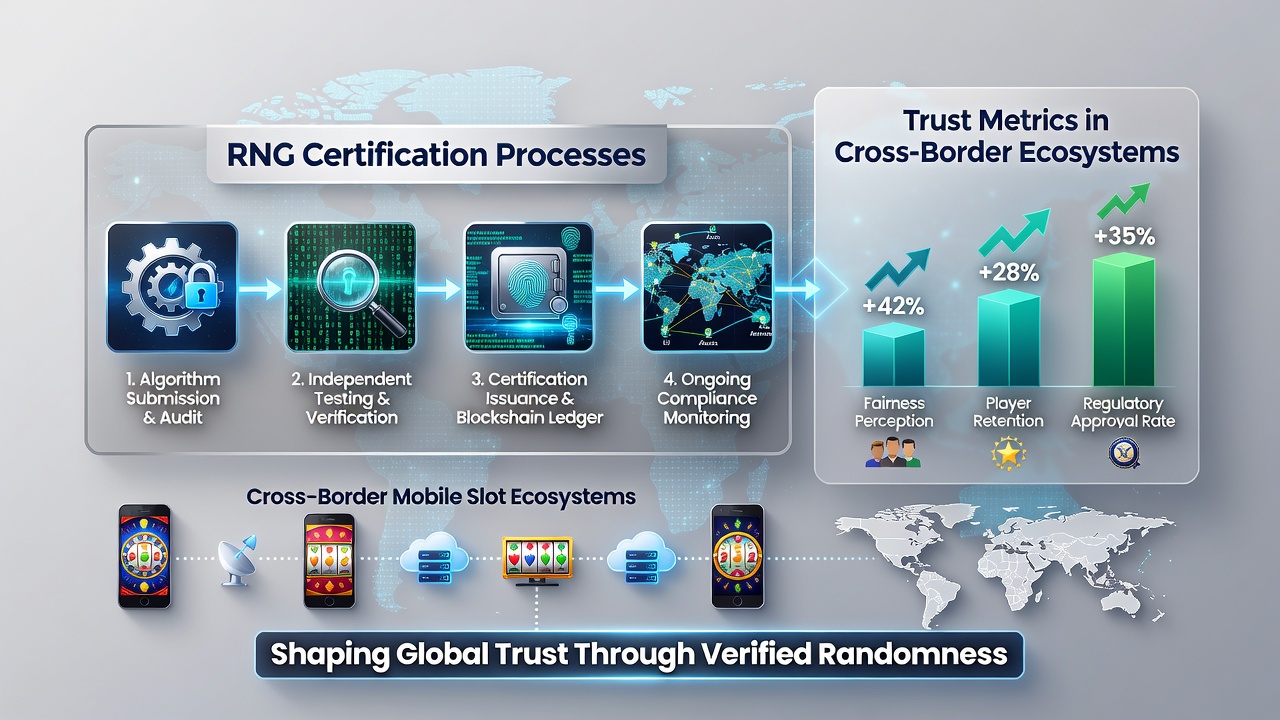
Independent labs perform initial source code reviews followed by entropy analysis and long-run distribution checks, and these evaluations continue with periodic re-testing that occurs at intervals determined by each licensing authority. Data shows that certification cycles typically last between 12 and 24 months depending on jurisdiction volume, whereas operators maintaining multi-region platforms must coordinate simultaneous renewals to avoid service interruptions. Research indicates that labs such as Gaming Laboratories International and iTech Labs apply uniform mathematical thresholds yet adapt documentation requirements to satisfy local regulatory nuances in markets from Europe to Asia-Pacific regions.
Cross-Border Regulatory Variations
European authorities coordinate through mutual recognition agreements that streamline certification acceptance across member states, but North American frameworks often demand separate state-level validations even when a game carries prior approval elsewhere. Australian regulators emphasize continuous monitoring dashboards that feed live performance metrics back to oversight bodies, and Canadian provincial systems add requirements for third-party escrow of source code copies. These differences create layered compliance matrices that platforms must navigate, and figures reveal that operators serving users in five or more countries allocate between 15 and 25 percent of technical budgets to certification maintenance alone.
Impact on Player Confidence Measurements
Trust metrics compiled by analytics firms track indicators such as session completion rates, deposit frequency, and complaint volumes related to outcome disputes, and researchers have linked higher certification transparency scores to measurable lifts in these areas. One study revealed that platforms displaying current certification seals experience retention improvements of up to 12 percent compared with those that do not, while surveys conducted through September 2026 showed users in cross-border scenarios cite independent verification as a primary factor when choosing among competing applications. Certification status therefore functions as a visible proxy for operational integrity that influences both acquisition costs and lifetime value calculations tracked by industry analysts.
Technical Integration and Ongoing Audits
Modern mobile architectures embed certified RNG modules within client-side and server-side components, and synchronization protocols ensure identical outcome sequences regardless of device location or connection type. Auditors conduct surprise inspections that include live seed verification and output logging, while blockchain-based timestamping has emerged as an additional layer that some operators adopt to demonstrate tamper resistance. According to reports from the European Gaming and Betting Association, platforms incorporating these combined safeguards report fewer regulatory inquiries and smoother license renewal processes across multiple territories.
Market Data and Adoption Patterns
Industry reports compiled through mid-2026 indicate that certified RNG implementations correlate with expanded market access in regions previously closed to uncertified providers, and this pattern holds particularly true for operators entering new Asian and Latin American corridors. Payment processors and affiliate networks increasingly reference certification status when evaluating partnership eligibility, which creates downstream effects on visibility and traffic allocation. Those who have examined adoption curves note that early movers who invested in comprehensive certification portfolios now hold measurable advantages in user acquisition efficiency compared with later entrants.
Conclusion
Certification processes continue to evolve alongside technological shifts in mobile delivery and regulatory harmonization efforts, and the resulting trust metrics provide quantifiable benchmarks that stakeholders across the ecosystem rely upon for decision making. As cross-border mobile slot operations expand, the alignment between verified randomness standards and observable player behavior remains a central dynamic shaping industry structure.